
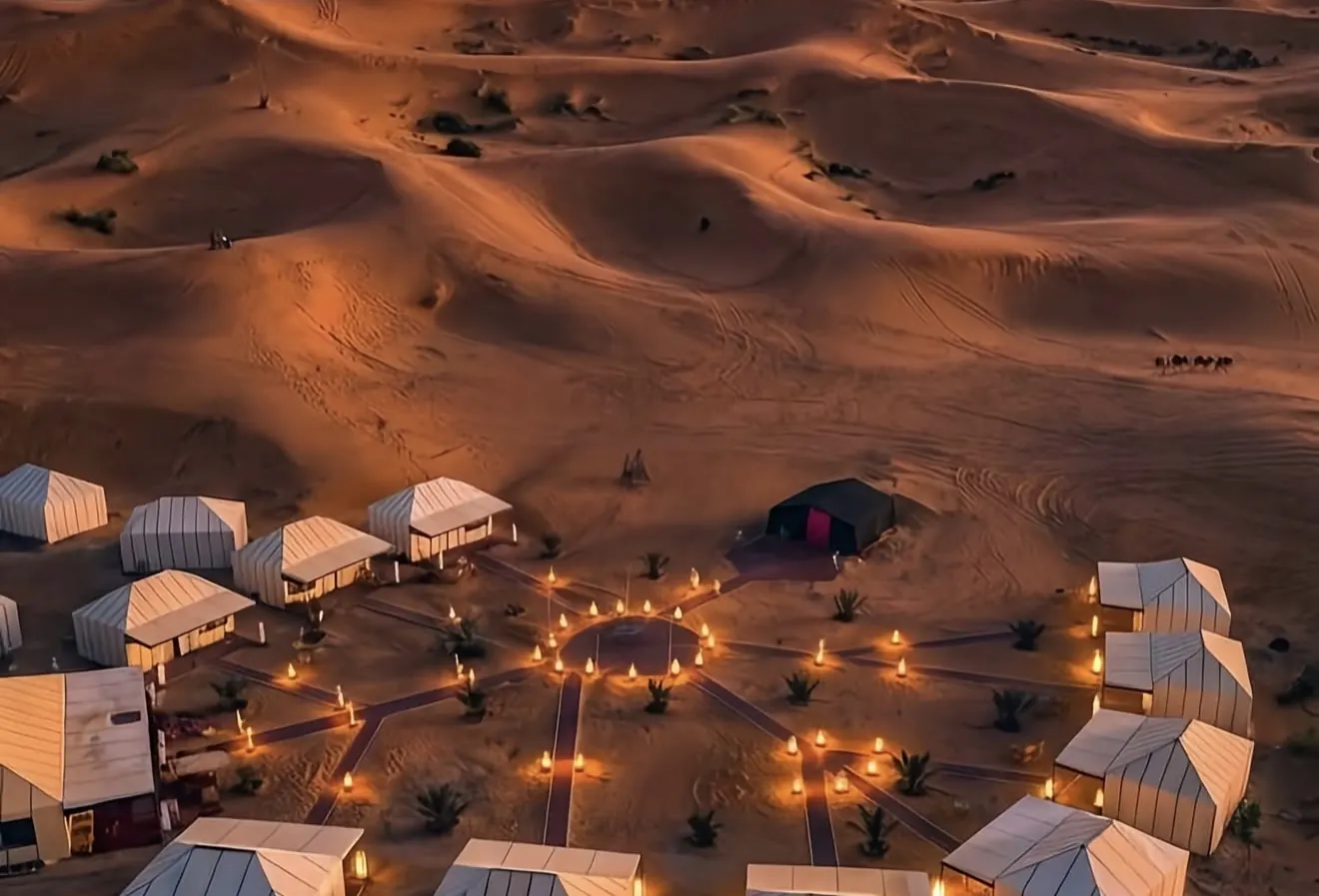
In Merzouga, the night sky is dark and wide. Far from city lights, you can see thousands of stars.
“A stunning reminder of the sheer awesomeness of the Sahara.”
Best nights for stars
- New moon: the darkest nights and the best Milky Way.
- Full moon: the dunes glow silver, but fewer stars are visible.
- Clear season: autumn and spring often have clear skies.
Where to watch
- From a dune near your desert camp
- Away from camp lights, with a guide
- Lying on a carpet on the sand after dinner
Photo tips
- Use a tripod or rest your phone on a bag.
- Turn on night mode or use a long exposure.
- Turn off torches and let your eyes adjust for 15 minutes.
Make it special
Ask us for a private dinner on the dunes or a late camel walk under the stars.
What you can see
- The Milky Way stretching across the sky
- Bright planets near the horizon
- Shooting stars, especially during meteor showers
- Constellations easy to find, like Orion in winter
Use an app
A free star map app helps you name stars and planets. Turn the screen to night mode so it does not ruin your night vision.
Best time of night
The sky is darkest a couple of hours after sunset. Moonset times change every night, so ask your guide.
Stay warm
Desert nights cool fast. Bring a jacket, sit on a blanket and enjoy tea while you watch. See our packing list.
Tell us your dates and group size. We reply fast on WhatsApp.
Frequently asked questions
Can you see the Milky Way in Merzouga?
Yes, on clear, moonless nights the Milky Way is very bright.
What should I bring for a night of stargazing?
A warm layer, a red or dim torch and a phone or camera with a tripod.